
The best habit tracker ideas are small, specific things you can tick off in a few seconds: drink a glass of water before coffee, read ten pages, walk for fifteen minutes, write one line in a journal. Below are 36 ideas grouped by area of life, plus how to pick the right three to five, which tracker layout to use, and the habits that keep a tracker going past the second week.
How to choose what to track
Most habit trackers fail the same way: too many rows on day one. Fifteen habits looks motivating on the first of the month and feels like homework by the tenth. A few rules keep it manageable:
- Start with three to five habits. You can add more next month once these feel easy.
- Make each one a yes or no. “Read 10 pages” is easy to tick. “Read more” isn’t.
- Track the smallest version. If the habit is exercise, the box might be “put on running shoes.” On good days you’ll do more, and on bad days you still get the tick.
- Mix one easy win with one stretch. An easy habit keeps the streak alive while you work on the hard one.
Habit tracker ideas by area of life
Pick a few from whichever area matters most to you right now. You don’t need one from every list.
Health and body
- Drink a glass of water first thing
- Walk for 15 minutes
- Stretch for five minutes
- Eat a vegetable with lunch
- Take your vitamins or medication
- No snacks after dinner
- In bed by a set time
- Floss
Mind and mood
- Read 10 pages
- Write one line in a journal
- Five minutes of quiet or breathing
- No phone for the first 30 minutes of the day
- Write down three good things from the day
- Spend time outside
- Practice a language for ten minutes
Work and study
- Plan tomorrow before you finish today
- One hour of focused work before email
- Clear your inbox to zero
- Review your notes from the day
- Study for 25 minutes
- Learn one thing for your job or a side project
Home
- Make the bed
- Empty the sink before bed
- Ten-minute tidy
- Water the plants
- Cook at home
- Lay out tomorrow’s clothes
Money
- No unplanned spending
- Write down what you spent today
- Bring lunch instead of buying it
- Move a small amount to savings
People and creative time
- Message a friend or family member
- Phone-free dinner
- Draw or sketch for ten minutes
- Practice an instrument
- Write 200 words
Ready-made habit sets for common goals
If you have a goal in mind but aren’t sure which habits lead there, start with a set of three. Each set has one easy habit, one that takes a little effort, and one that supports the others.
- Sleep better: no screens in bed, in bed by a set time, a short walk in daylight.
- Get fitter: put on workout clothes, move for 20 minutes, drink water with every meal.
- Read more: read 10 pages, keep a book by the bed, write down one line you liked.
- Feel calmer: five minutes of quiet, no phone for the first half hour, three good things before bed.
- Spend less: write down every purchase, no unplanned spending, bring lunch.
- Get more done at work: plan tomorrow before you finish, one focused hour before email, review the day’s notes.
Run one set for a month, then look at which of the three actually moved you toward the goal. Keep that one, and swap the others for something new.
How to set up a monthly habit tracker
- Write the month and your three to five habits down the left side, each as a short yes-or-no phrase.
- Number the days across the top, 1 to 31, or draw the grid only for the days the month has.
- Decide how you’ll mark it. A filled box for done, a dot for a smaller version, and an empty box for missed is enough.
- Leave a few lines underneath for a short note at the end of the month: what worked, what didn’t, what to change.
That’s the whole setup. If you’re drawing it by hand each month, a grid takes about ten minutes. A printed or digital template skips that part, so you can start ticking on the first.
Which habit tracker layout to use
The layout matters less than you’d think, but a few work better for different goals:
- Monthly grid. Habits down the side, days of the month across the top. It’s the classic bullet journal habit tracker, and seeing a whole month of ticks is motivating.
- Weekly tracker. Seven boxes per habit. Better if a month feels too long, or if your weeks look very different from each other.
- 30-day challenge. One habit, 30 boxes. Good for trying something new without committing to it forever.
- Year in pixels. A square for every day of the year, shaded by mood or by whether you kept a habit. Slow to fill, but it shows patterns over months.
How to keep a habit tracker going
The tracker only works if you open it. Keep it somewhere you look every day, like the first page of your planner or a tab on your tablet’s home screen. Tick boxes at the same time each day, such as before bed, so it becomes a habit of its own.
Missed days are normal. A missed box isn’t a failure; it’s information. If one habit is empty most of the month, the habit is probably too big. Shrink it, move it to a different time of day, or drop it. At the end of each month, look back and decide what to keep, change or drop for the next one. That review is where the tracker actually earns its place.
Paper, app or e-ink tablet?
Apps remind you, but they’re easy to ignore and live on the same phone that distracts you. Paper is satisfying to fill in, but you redraw the grid every month. A habit tracker template on an e-ink tablet sits in between: you write ticks by hand like paper, the grids are already drawn for the whole year, and it’s on a device without notifications.
Questions
How many habits should I track?
Three to five to start. Add more only once those feel automatic.
What are good habit tracker ideas for beginners?
Simple yes-or-no habits with a clear finish: drink water first thing, read ten pages, a 15-minute walk, in bed by a set time.
What should I do when I miss a day?
Leave the box empty and carry on the next day. One gap doesn’t undo a month. If the same habit keeps getting skipped, make it smaller or move it to a better time of day.
Should I use a monthly or weekly habit tracker?
Monthly if you like seeing streaks build up. Weekly if a whole month feels like too much, or your routine changes a lot from week to week.
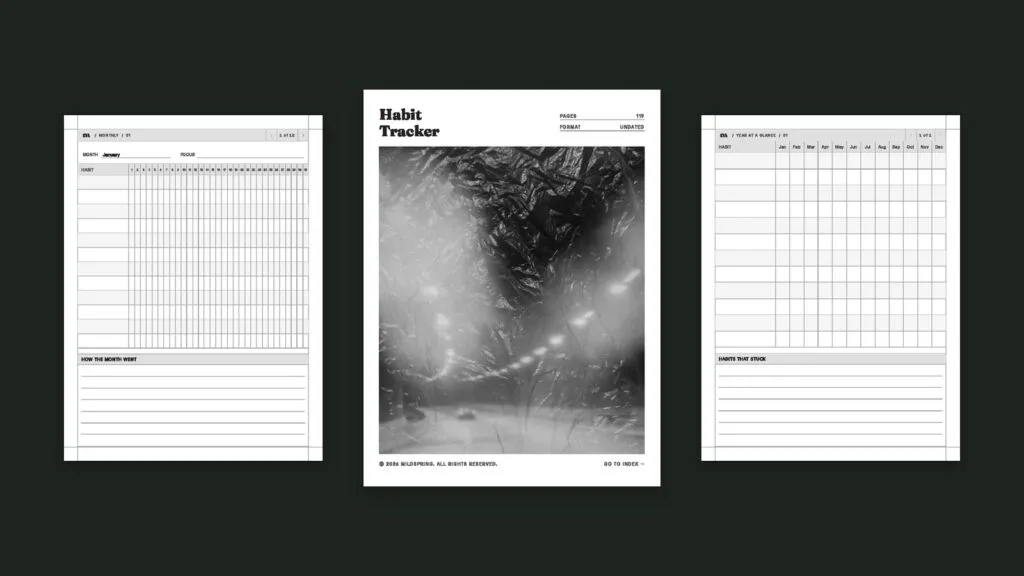
Want the grids already drawn? Our Habit Tracker is an undated, hyperlinked PDF with 12 monthly trackers (12 habits across 31 days each), a plan page for each habit, 52 weekly check-ins, 48 thirty-day challenges and a year in pixels, sized for reMarkable, Kindle Scribe, Supernote, BOOX and more. If you keep a bullet journal, our minimalist bullet journal guide shows where a tracker fits, and Ryder Carroll’s Bullet Journal site has more on the method.
