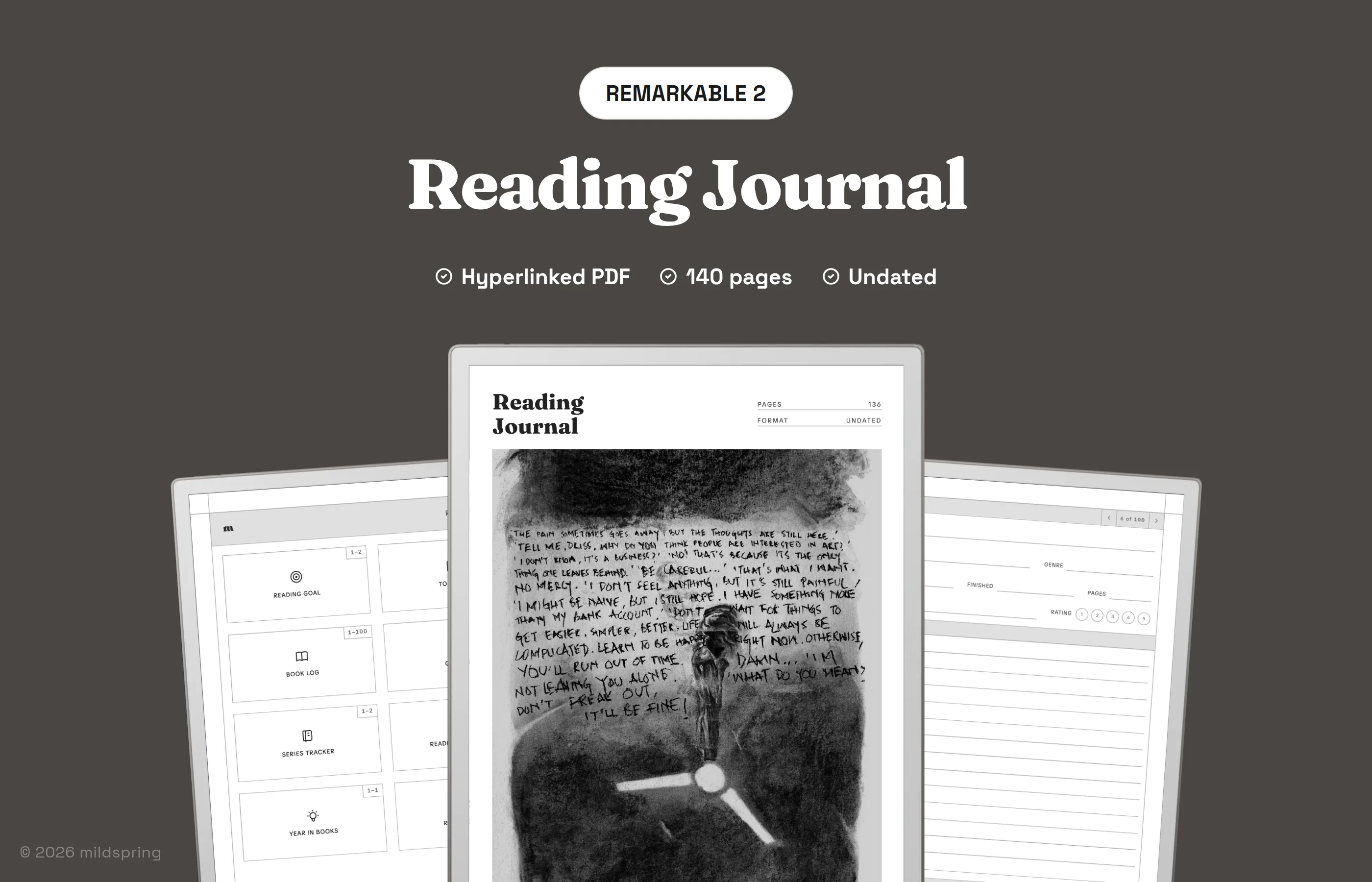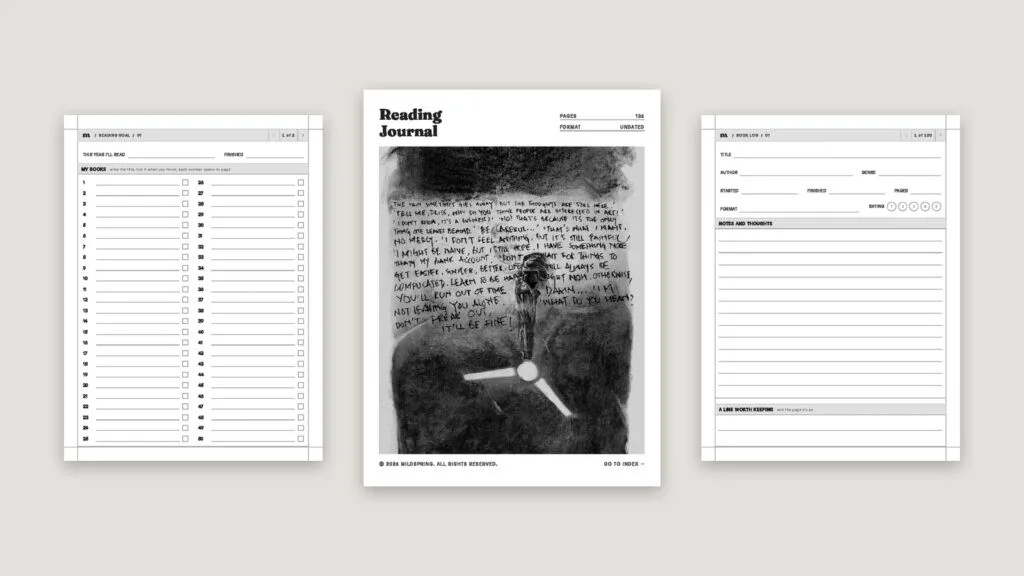
Good reading journal ideas fall into three groups: pages for planning what to read, pages for each book as you finish it, and pages for looking back over a month or a year. You don’t need all of them. A to-read list, one page per book and a running list of favorite quotes make a solid journal on their own. Below are 20 ideas, what to write on a book page, how to set the journal up, and how to keep it going when life gets busy.
What a reading journal is for
A reading journal is a notebook, paper or digital, where you keep track of what you read and what you thought of it. Some people keep a short line per book. Others write a full page of notes and quotes. Either way, it gives you something an app’s star rating doesn’t: your own words about a book, which you’ll be glad to find years later when you’ve forgotten the plot.
Reading journal ideas for planning
- To-read list. Every book you want to read, with a box to tick when you get it.
- Reading goal. A numbered list from 1 to your target, filled in as you finish books.
- Reading challenge. A list of prompts, like a book in translation, a classic you skipped in school or a book from the year you were born.
- Series tracker. Each series you’re reading, its author, and which books you’ve finished.
- Authors to explore. Writers someone recommended, or whose other books you want to try.
- Library and borrowed books. What you borrowed, from whom, and when it’s due back.
- Upcoming releases. New books you’re waiting for, with their release dates.
Pages for each book
- Book review page. One page per book, with your thoughts and a rating. More on what to write below.
- Favorite quotes. Lines worth keeping, with the book and page number.
- Characters. A quick list of who’s who for long or crowded books.
- Words to look up. New words you met while reading, with what they mean.
- Book club notes. Questions to bring and what others said.
- Did not finish. Books you gave up on and why. It’s useful to see the pattern.
Pages for looking back
- Monthly reading log. Titles finished and pages read each month.
- Year in books. Your book of the year, your favorite new author and how many books you read.
- Genre tracker. A tally of what you read, to see if you’re stuck in one genre.
- Ratings at a glance. Every book and its rating on one page, so you can see your best reads quickly.
- Re-reads. Books you’ve read more than once, and how your view changed.
- Books to recommend. Who each book would suit, for the next time someone asks.
- Next year’s list. What you want to read next, started while this year’s books are fresh.
What to write on a book page
A book page works best when it’s quick to fill in. The basics take a minute: title, author, genre, the dates you started and finished, the number of pages, the format (print, ebook or audiobook) and a rating. Then, if you have time, a few lines of notes. These prompts help when you’re staring at a blank space:
- What was it about, in one sentence?
- What did you like most, and what didn’t work for you?
- Which character or idea will stay with you?
- Did it change how you think about anything?
- Who would you give it to?
Finish with one line worth keeping, a quote or a thought of your own. It’s the part you’ll reread most later.
How to set up your reading journal
Start small. Set up three things on the first pages: a to-read list, a numbered reading goal and a quotes page. Then leave the rest of the notebook for book pages, one per book, in the order you finish them. Add a series tracker or a challenge page later, only if you find yourself wanting one.
If you’re using a paper notebook, number the pages and keep a short index at the front so you can find a book again. On an e-ink tablet, a reading journal template can do that for you: each number on the goal page links straight to that book’s page.
Keeping it going
Most reading journals stall because the book pages feel like homework. Two habits help. Fill in the basics the day you finish, even if the notes wait. And give yourself permission to write one line instead of a page. A journal with a line for every book you read is more useful than one with three beautiful pages and nothing after March.
Paper notebook or e-ink tablet?
A paper reading journal is lovely to flip through, and many readers enjoy decorating it. The trade-off is setup: you draw every list and grid yourself, and once the notebook fills up, last year’s books live on a shelf instead of with you.
On an e-ink tablet, you still write by hand, but the pages are already laid out and linked. You can keep several years of reading journals in one place, and when you’re standing in a bookshop wondering whether you’ve read something, the answer is in your bag. If you already read ebooks on the same tablet, your journal sits right next to your library.
Questions
What should I put in a reading journal?
At minimum, a to-read list, a page or line for each book you finish, and your favorite quotes. Add a reading goal, a series tracker or a year in books if you like lists and numbers.
What are easy reading journal ideas for beginners?
Keep it to three pages: a to-read list, a numbered list of books finished with a rating for each, and a quotes page. You can add the rest once those become a habit.
How often should I write in my reading journal?
Whenever you finish a book, at least for the basics. Some readers also add a line or a quote while they’re reading. There’s no right schedule, as long as each finished book gets its entry.
Is a reading journal the same as a reading log?
A reading log is usually just a list of what you read and when. A reading journal adds your thoughts, ratings and quotes. Many journals include a log as one of their pages.
Want these pages ready to fill in? Our Reading Journal is an undated, hyperlinked PDF with a reading goal of up to 100 books, a page for each book, to-read pages, 12 pages of quotes, a series tracker, a 24-prompt reading challenge and a year in books, sized for reMarkable, Kindle Scribe, Supernote, BOOX and more. If you track other habits alongside your reading, see our habit tracker ideas, and for a deeper look at keeping a journal by hand, the Bullet Journal method is a good place to start.